Scaling to 10 people
For broader context, this post is Chapter IV of the Why Cyrius Failed series.
Recap of the previous parts: We launched our cybersecurity startup while still at school, using no-code tools, and transitioned from a school project to a full-time venture (Chapter I).
With our first clients on board, we brought on interns, secured our first major contract (+100k€), and hired a CTO (Chapter II).
We then gained enough traction to reach 20k€ MRR and ultimately raise 700k€ in financing to fuel our growth (Chapter III).
Now that we had cash, we were expected to invest it.
Table of contents
- Finally new employees
- Driving a racing car
- Investing in inbound marketing
- Back to traditional outbound sales
Lessons learned
- #20 - Be fair, not nice.
- #21 - Stay as lean as possible.
- #22 - Selling before anything else.
- #23 - Take care of yourself.
"You'd better sell basic features than not sell the upcoming, fancy ones. What's the point of cooking a killer product if you die before it gets released?"
At that time, I was struggling to find a way out of the product development loophole.
I was desperate to increase brand awareness around our vision of Behavior-Based Security, as our unfinished platform was preventing me from getting back to actual selling.
Or so I thought.
Let's dive back in before I receive that very useful piece of advice.
As soon as we got the money from the raise, we launched the hiring process.
I filtered candidates from recruiting agencies and quickly found a good fit: an experienced guy who could start in a month.
We paid the agency and waited for his first day.
Except that…
Except the guy did not show up.
We received a WhatsApp message from him the Sunday night, saying that we'd found a better company to work with.
We were so shocked and disappointed. And that's not the end of the story.
When we asked the agency for a refund, they declined - it was obviously written in small characters in the contract. They were supposed to find a substitute candidate but only had an obligation of means, not results.
We never heard from anyone.
Now you may think, it is part of the game and it is only a fee. For those of you who are not familiar with recruiting agencies, commissions typically vary from 20 to 30% of the annual salary (!).
For us, it meant €15k vanished in thin air, only a few weeks after closing the financing round.
LESSON #20: Be fair, not nice.
Basic business and finance lesson: be paid as soon as possible and pay as late as possible. We wanted to be nice, we were nice only once. I am still pissed off by that story years later. At least I learned my lesson.
Finally new employees
Our CTO was still working alone on an unstable product, with grumbling customers and now expectations from our investors. Processes were stuck between the no-code stack and code integrations.
We eventually decided to reboot the product from scratch (finally!) so that new developers would work on a clean, brand-new architecture.
Hiring became our top priority. We invested in a proper job board (with a presentation video 🇫🇷) and I spent weeks in interview processes.
By the end of the first quarter, we had found three engineers.
It was hard on our CTO, who had to build the product, recruit, and onboard his teammates simultaneously. But new features started to appear, and the process of creating a clean product gradually took shape.
The competition was tough, and they had more technical resources than us. We decided to speed up even more, which was a pivotal moment for us.
We could have stopped with three FTEs, which was already a big change. Above all, it was too risky a move to keep increasing our cash burn without a clear path for growth.
Don't get me wrong, I loved that part of our journey.
We hired two more developers for the following months and a summer operation intern, which brought the team to 10 people overall.
We created an amazing culture even while fully remote, organized a wonderful offsite in Normandy, and had a great time with the team.
Many fond memories were forged that year.
At that time, the risk seemed worth the investment. We were genuinely convinced that sales would catch up with the spending quickly.
But truth be told, we rushed into recruiting before we were fully ready for it.
LESSON #21: Stay as lean as possible.
We already knew that it was risky to keep hiring at our revenue stage. We still went for it for bad reasons:
1. the competition did so (but had more money as well)
2. we thought revenue would catch up later on (it did not)
Be bold but not reckless. Save your cash.
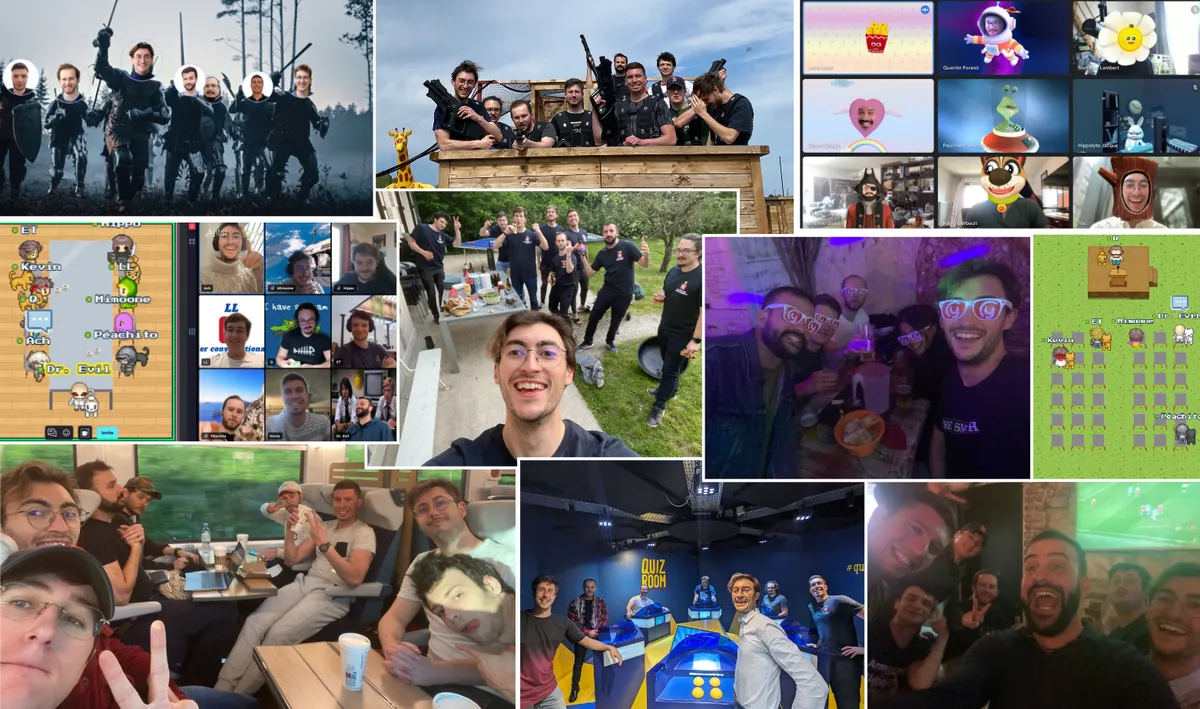 Year 2 to 3 - The most amazing team ever ❤️ If you pay attention you can find Solange, who brought a - needed - feminine side to our boy's band. You can also see WorkAdventure, our online office for remote work.
Driving a racing car
From the product side, we constantly swung between maintaining the legacy product and exploring new features. It was only six months after we started recruiting that we released a "stable" version of the product.
So many things were happening at the same time:
- Onboarding the newcomers
- Coding basic features we used to have with no code
- Pushing forward with innovative features
- Managing requests from existing customers and prospects
- Changing the roadmap priorities for specific events: security conferences, business and partnership opportunities...
All that while creating a culture, establishing processes, safeguarding communication in a full-remote team…
I recall that time as a bit blurred in my mind. We had to learn so many things at once, it felt like I was trying to catch up on a bullet train.
It was thrilling and at the same time scary. Cash was melting and we were still not ready to sell.
Investing in inbound marketing
Talking about sales, that year was divided into two parts. In the first semester, I struggled to find customers.
I painfully managed to get demos, and when prospects tried the product, they were disappointed. At some point, I even had to stop prospecting as it led nowhere.
That's when I started experimenting with inbound marketing: if I could not sell, I would promote our brand and vision so that people knew us before we were ready to serve them.
I launched a series of initiatives, such as
- creating a second white-paper to promote our vision of Behavior-Based Security (here is the link)
- writing articles about security to increase our legitimacy,
- going back to the largest European security conference,
- posting regularly on LinkedIn,
- organizing monthly webinars with famous security people,
- participating in debates and podcasts,
I even arranged an IRL conference with 3 speakers and 50+ attendees at our office!
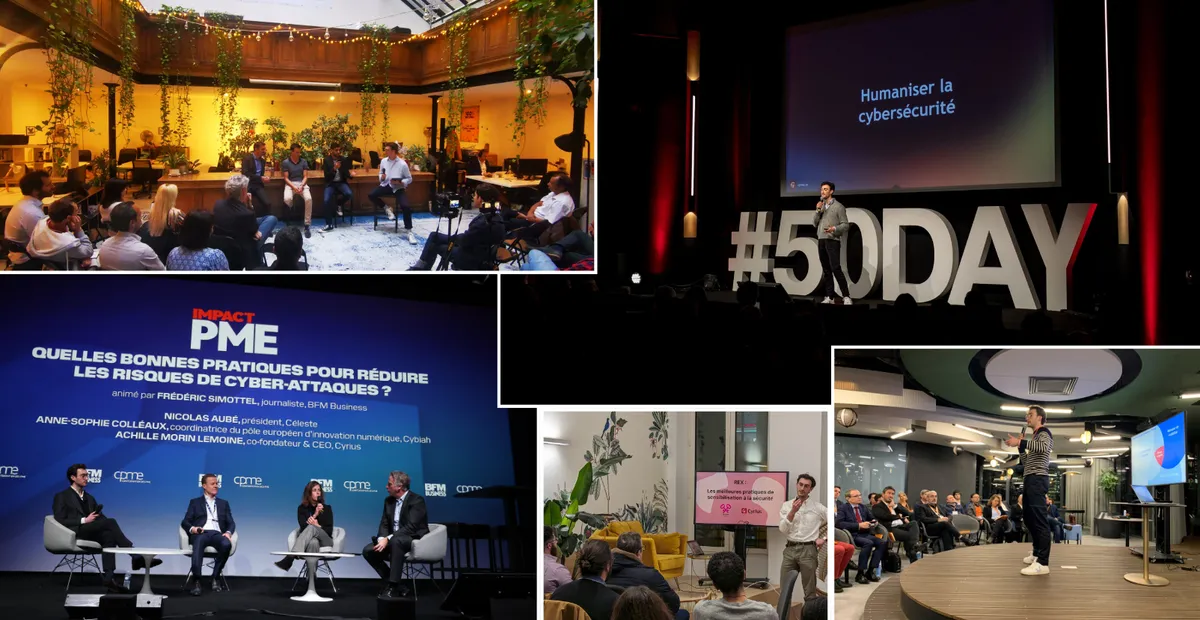 Year 2 to 3 - I loved participating in and organizing events. +1 for my public speaking skills :)
The success varied according to the initiative, but overall our reputation and branding power increased. I engaged with dozens of potential clients by bringing them high value.
However, I lost sight of what mattered the most at that time: making money in one way or another.
LESSON #22: Selling before anything else.
As I already mentioned in Chapter II, investing in long-term inbound strategies can be appropriate. But in the early stages, your focus is to find your first clients yourself. Content creation must be used to improve your sales flywheel directly, not as your main growth engine (at least in a sales-led GTM motion such as ours).
In retrospect, I wish I could keep selling instead of betting everything on branding. Even when your product is not ready, you can still sell your expertise. It is a good way to stumble on good problems to solve, bring in cash, and maintain team morale.
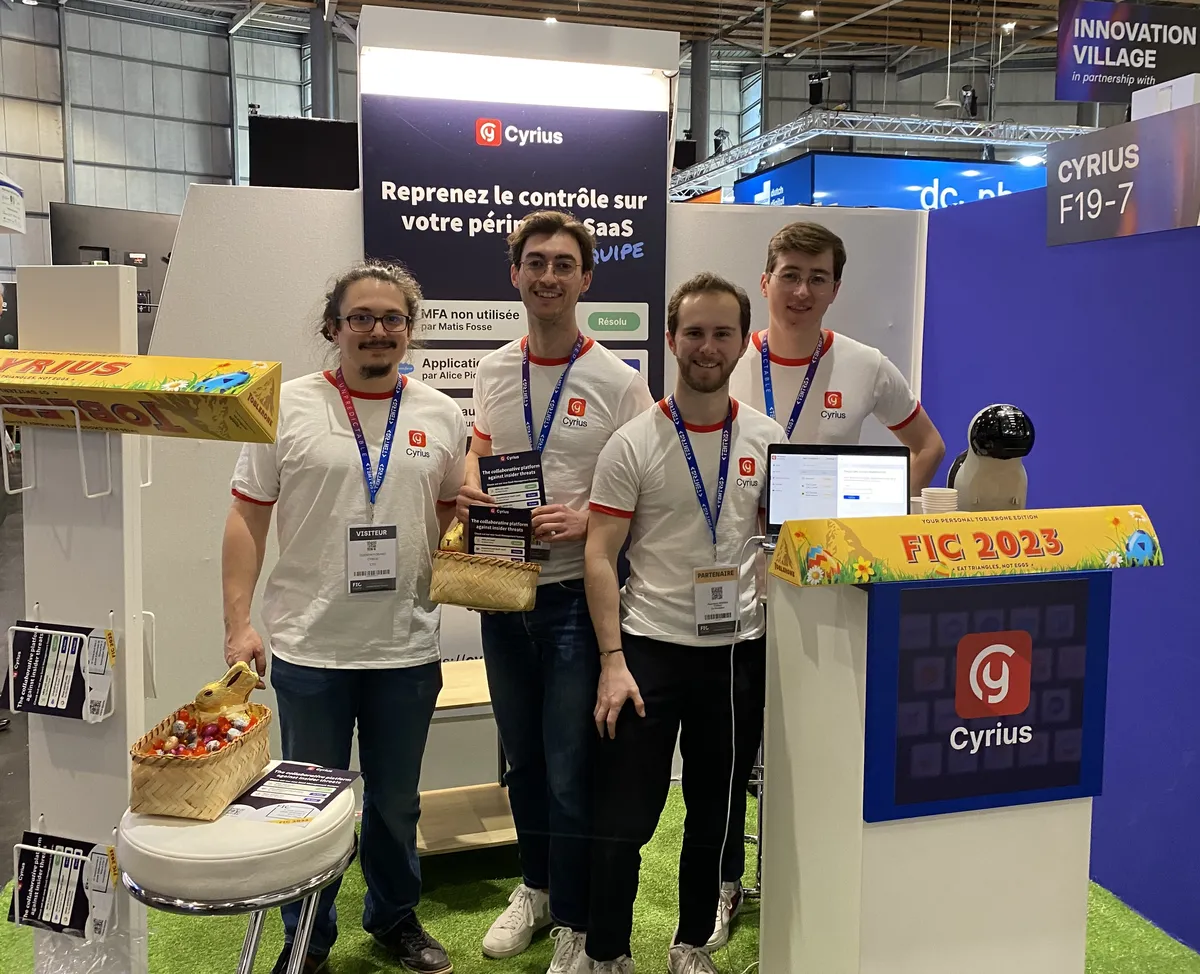 Year 2.5 - The security conference was during Easter: we branded giant Toblerone chocolate bars and distributed chocolate eggs to whoever passed through the stand. We gathered 100s of names that way!
Tough market dynamics
Before getting into the last part, some precision is needed on business and pricing dynamics. It becomes a bit nerdy, feel free to skip this part if not interested 🤓
The security awareness market makes it hard to succeed for one simple reason: the competitive environment is very intense, and still growing.
Which is fair for a huge market with low barriers to entry. We saw many new incumbents popping up, others raising funds, sometimes a lot. Sounds like I am describing the AI market in 2024.
Beyond the emotional tension it creates, there are two main consequences for small players:
- Market shares are bought.
The cyber awareness market is historically trusted by huge actors like KnowBe4 and its 50k+ customers worldwide or more generalist security companies such as Proofpoint.
Those guys can offer massive discounts and basically buy off market shares. To be competitive with them, we would have to lower our prices by a factor of 4!
Newer players raised enough money to enter that game, enabling them to cut off their prices by 50–70%.
You can't compete without eating your own margins. Unless you are radically different, which we were not (more on that in the last article).
- The marginal price of a license massively decreases with volume.
You can sell full-price for dozens of seats. But as soon as you negotiate with customers with hundreds or thousands of employees, the expected discount gap is enormous.
That makes a lot of small customers comparatively more profitable than a few big ones.
Unfortunately, smaller firms are also less aware of cyber threats, which means you either
- spend time ( = lose money) to evangelize on the problem,
- or you just buy off contracts hoping for renewals (to average out your long-term value).
In any case, you need a powerful sales machine to convert those leads. Which leads to the next stop of our journey.
Back to traditional outbound sales
When the product started to look like something again, I entered one of the most intense periods of my life.
We had spent too long with an unfinished product, so we were still conflicted between the legacy product and the new features, and struggling with who to sell to.
I received solid, straightforward advice that I needed to hear at that time, such as "You'd better sell basic features than not sell fancy ones".
It is easier than I thought to get caught up in your revolutionary idea and forget that to stay in business you need, well, business.
I built a sales machine and began cold-calling prospects.
I basically spent 3 months locked in a phone box, calling non-stop from 8 am to 6 pm. I tried multiple techniques, from proposing free phishing audits to new PoCs.
Through coaching and willpower I started to understand how convincing people works - and eventually became good at it.
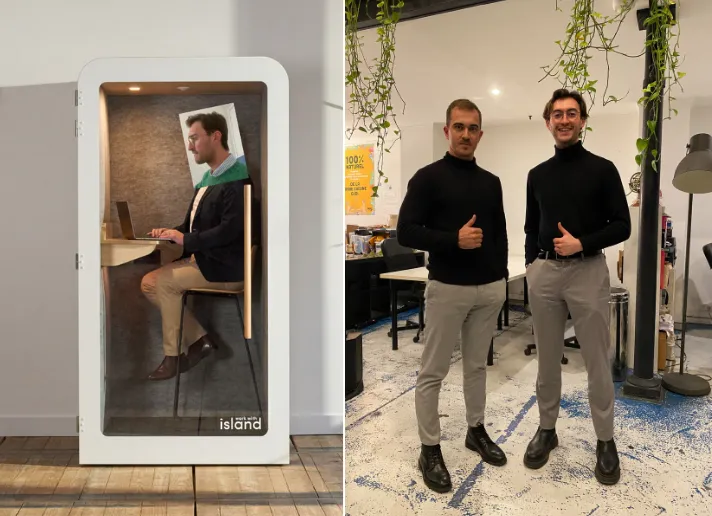 Year 3 - LEFT: I don't have any pictures of myself but I lived in there for 3 months straight. / RIGHT: Cyrius' Killer Sales Team
Meetings started piling up: I booked 30+ meetings with high-qualified prospects in a few weeks!
At some point I could not manage cold calls, first meetings and demo calls, so I hired a friend of a friend as our first sales rep to scale our processes. We did an awesome job together and learned a lot from each other.
It was a very intense and exciting time.
LESSON #23: Take care of yourself.
I worked so hard for that period that I barely had any social interactions for months. Even during that whole four-year journey, I deeply struggled to find my rhythm: when to take time off, when to leave the building and go for drinks… Work-life balance in a startup is challenging because work IS life. I don't think such an absolute equilibrium even exists.
What I understood with time is that you cannot under-invest in one part of your life for too long. You can sometimes stretch some areas and squeeze others, but eventually, you need them all to avoid burn out.
Despite our efforts and the meetings we were booking, it was still not enough.
We had somehow figured out the top of the funnel (i.e. how to bring people into conversations), but the conversion rate needed to be higher. Prospects either weren't convinced by the emergency of investing in their cybersecurity, or in our ability to protect them.
This made our sales cycle too long (2–6 months) relative to our average contract value (€5k-€10k). We were making some sales, but the effort to close them was disproportionate.
So the perspectives of strong growth kept being postponed again and again.
As our team grew and we pushed forward with our new vision, we faced harsh choices. In Chapter V, we'll delve into the reasons behind our failure, the difficult decisions, and the decline of Cyrius.