Pivoting 4 times in 6 months
For broader context, this post is Chapter V of the Why Cyrius Failed series.
Recap of the previous parts: We launched our cybersecurity startup while still at school, using no-code tools, and transitioned from a school project to a full-time venture (Chapter I).
With our first clients on board, we brought on interns, secured our first major contract (+100k€), and hired a CTO (Chapter II).
We then gained enough traction to reach 20k€ MRR and ultimately raise 700k€ in financing to fuel our growth (Chapter III).
With new funding, we expanded our team to 10 members and navigated the challenges of scaling, but faced tough competition and difficulties to sell (Chapter IV).
So what happens when you don't find product-market fit?
Table of contents
- A product not differentiated enough
- Leaving the team behind
- Why not stop?
- Back to square one
- Two people with cash in the bank
Lessons learned
- #24 - Find your niche.
- #25 - As much as you like the people, the company is what matters most.
- #26 - Knowing when to quit.
A product not differentiated enough
One of the main reasons we were losing deals was that our product needed to be specifically targeted to a defined audience.
We did have customer segmentation from a business perspective, but we had not invested in building a product that would solve their specific problems.
To put it differently, our product was not inherently bad (we were proud of it!), but it was made for anyone - and thus, for no one in particular.
This was usually not the case for our competitors, so when prospects were ready to buy we were not providing the best value proposition for their specific situation.
We had developed a mild product.
Engaging end users in cybersecurity is also very, very hard. They just have other things to do.
We tried a plethora of tactics to make our content worth consuming, from gamification to real-time nudges. None worked more than another.
The hardest thing is that we received more positive feedback than negative, about the SAME content. See below how weird it is to read those testimonials regarding a similar module.
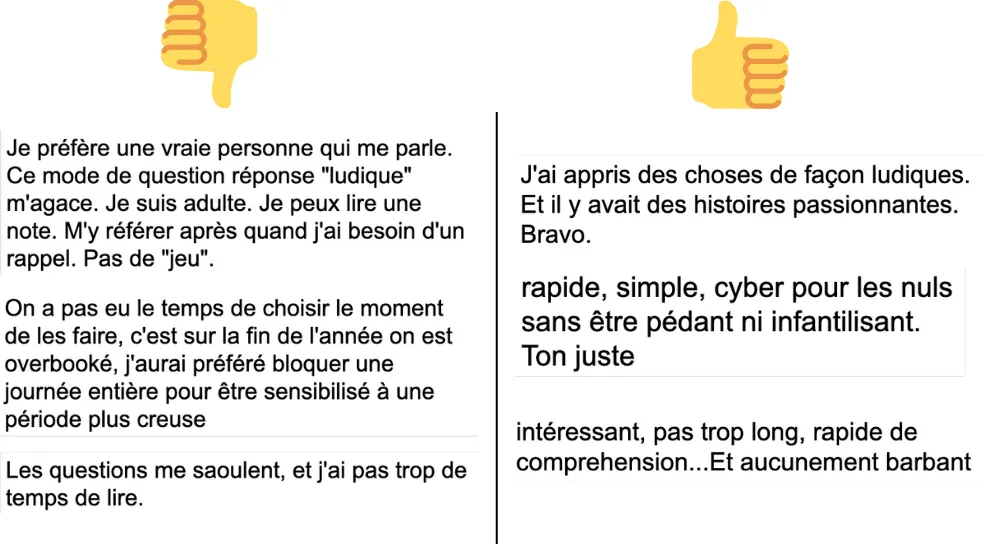
Left (negative feedback)
- "I prefer a real person talking to me. This "playful" question-and-answer method annoys me. I'm an adult. I can read a note and refer to it afterward when I need a reminder. I don't need a "game"."
- "We didn't have the time to choose when to do them, it's the end of the year and we're overbooked, I would have preferred to block off a whole day to raise awareness at a slower period."
- "The questions bore me, and I don't have much time to read."
Right (positive feedback)
- "I learned things in a fun way. And there were some fascinating stories. Well done."
- "Fast, simple, cyber for dummies without being pedantic or infantilising. The right tone."
- "Interesting, not too long, quick to understand…and not at all boring"
Although users were exposed to the same content, we struggled a lot to make everybody happy.
Worst for us, users' negative feedback was often not tied to our product, but rather to our clients' internal context (eg. "we're overbooked, no time for your training modules"). We did adapt the platform so that people complete the modules faster, but our clients still expected us to provide the maximum information.
That difficulty is inherent to content creation (and shared with tons of other businesses than ours) and is exacerbated when the client (CIO/CISO) is not the final user (regular folks).
That negative effect can be softened with strong bets on being polarized. We should have made firmer product choices.
I even did something that demanded me a fair amount of courage: I reached out to our main competitors and had meetings with five of them to understand where we had it wrong.
Guess what, they all had picked a precise positioning (product AND targets), at least at the beginning.
One of them had this whole concept of "cyber-dojo" with manga characters, judo belts to win, etc. Maybe it was not for everyone, but when it matched the corporate culture, it was a hit among employees.
We never found that.
LESSON #24: Find your niche.
You've likely heard the quote, "Selling to anyone is selling to no one". That's exactly what happened to us. Your product choices should be polarizing so that you find your fans as early as possible. When you don't say no to features, you are still making a choice: the choice of being undifferentiated.
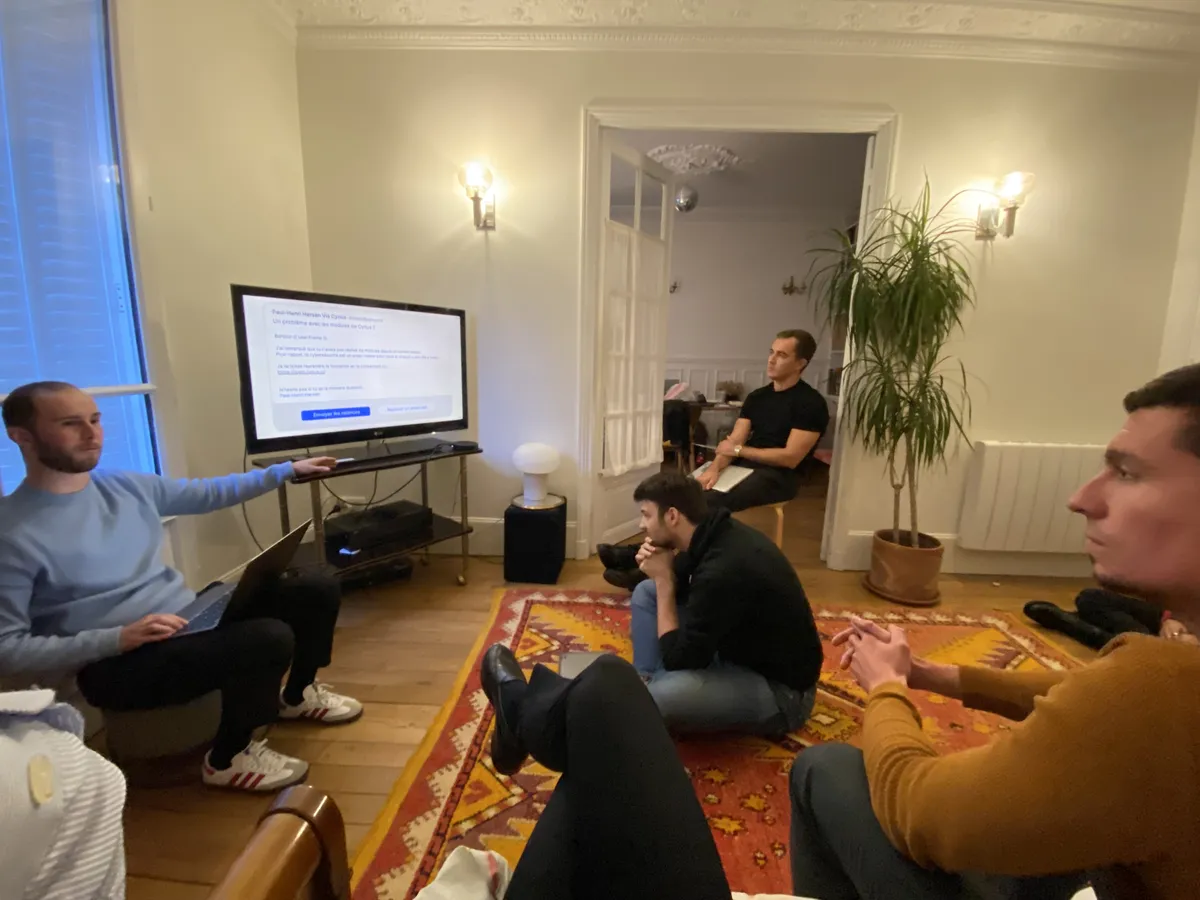
Year 3 - Team presentation about what was supposed to be a "killer feature"
On another topic, we also had to manage the departure of one of our historical associates, who had other dreams to pursue. (Fortunately, we're still on good terms ❤️).
Communication within the founder team was hard for many reasons, and I could write a whole article about it. The tensions built up during those months did not help stabilize the situation.
Leaving the team behind
As months went by, the prospects of growth seemed to get further and further away.
We still believed, though.
Energy comes from faith and hope. We were giving our everything to build and sell our product to the world.
Delusion comes gradually. You start by losing some deals, say it is part of the game.
But it keeps going south. Maybe you win one or two battles, enough to pump you up. You keep motivating your troops. It is your job anyway, to believe.
Until reality catches up for good.
We lost two or three important opportunities that could have been decisive. I remember opening my Excel file with the budget, running some scenarios, and realizing, "We are not gonna make it". I discussed the matter with my co-founders, which was no easy talk.
That's when we decided to let the team go to offer us a chance to survive.
We could have clung blindly to our hopes and prayed it would work out, but we chose to face reality. At some point, we started the negotiation process with our employees.
They had been loyal, good soldiers and now we were asking them to leave. That was the most painful moment.
We did find a solution for everyone though. We offered them a decent package in fair conditions so that they could find other jobs. By the end of the following month, they were all gone.
LESSON #25: As much as you like the people, the company is what matters most.
Firing a whole team was the hardest thing in my professional life. But I am proud we gave ourselves a chance to get back on track. Of course, it is all about the journey with people. But startups are a sports team, not a family. What matters is that the team wins, not who is on the field.
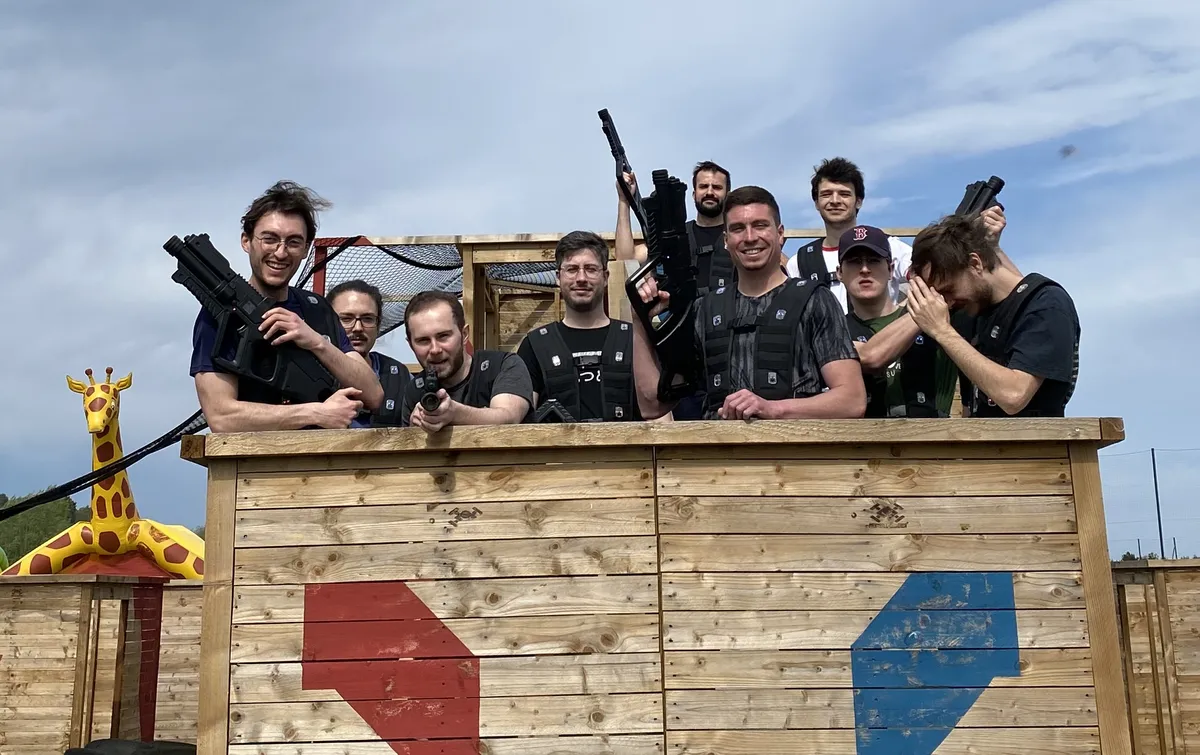 Thank you guys.
Why not stop?
Before heading into the last part of the journey, let's pause for a moment.
When reading all this, you might wonder why we kept going at all. "There were so many mistakes or just signals that things would not work out", you may think.
The thing is, when you are in the everyday grind, it is really hard to recognize what you did well or wrong. A missed opportunity can lead to an unexpected positive outcome later on, so when you're in it you merely try to avoid the rocks on the road.
We did many things right, too:
- Our product was loved by thousands of employees, despite the few grumpy testimonials that we got.
- Our clients loved our energy and genuine effort to craft the best possible platform.
- Industry experts and prospects were in love with our vision.
So why stop?
It's not a straight line pointing toward success or failure, but rather a starting point and an end, with a complete mess in between.
The whole experience is so intense and simply staying alive is so hard that it takes all our mental energy.
Another important element is that if you don't genuinely believe you will survive, you cannot expect to. The universe tends toward entropy and tries to tear your little enterprise apart.
You have to somehow convince yourself that you are doing the right thing, enough to dedicate hours and months to it. Otherwise, it cannot happen at all.
All these lessons took a long time to sink in. Some we figured out sooner than others, whereas we kept falling into the same traps over and over in other topics.
Back to square one
The first weekly meeting we had with my two remaining co-founders felt weird. It took us time to acknowledge what had happened.
We organized an offsite between the three of us to discuss whether we still wanted to work together and on what. It was hard to bounce back, but we had faith.
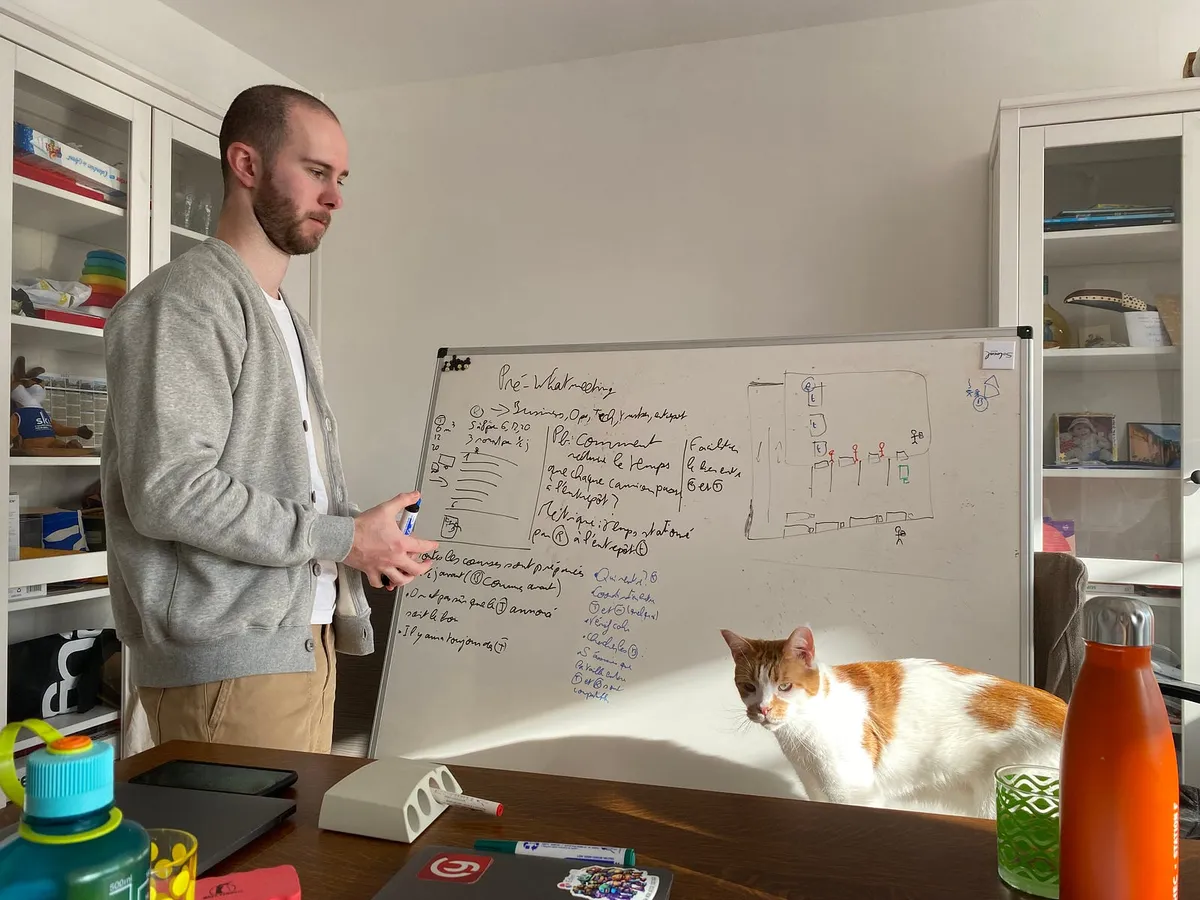
Year 3 - Reflecting on what we want next
What we first decided was to put the traditional awareness training to a halt. We had had enough of it.
We stopped the remaining commercial prospects and started explaining the situation to our clients. We kept the platform up until the end of their annual contracts so that we could help them transition.
In the meantime, we delved into many fresh ideas. Here are some of the iterations we made, and why it did not work.
#1. Going at the bottom of our fundraising vision: behavior-based security.
I was frustrated to throw away all our knowledge around users' behavior, so we worked on a browser extension that would monitor specific, dangerous actions and ping the user to alert them.
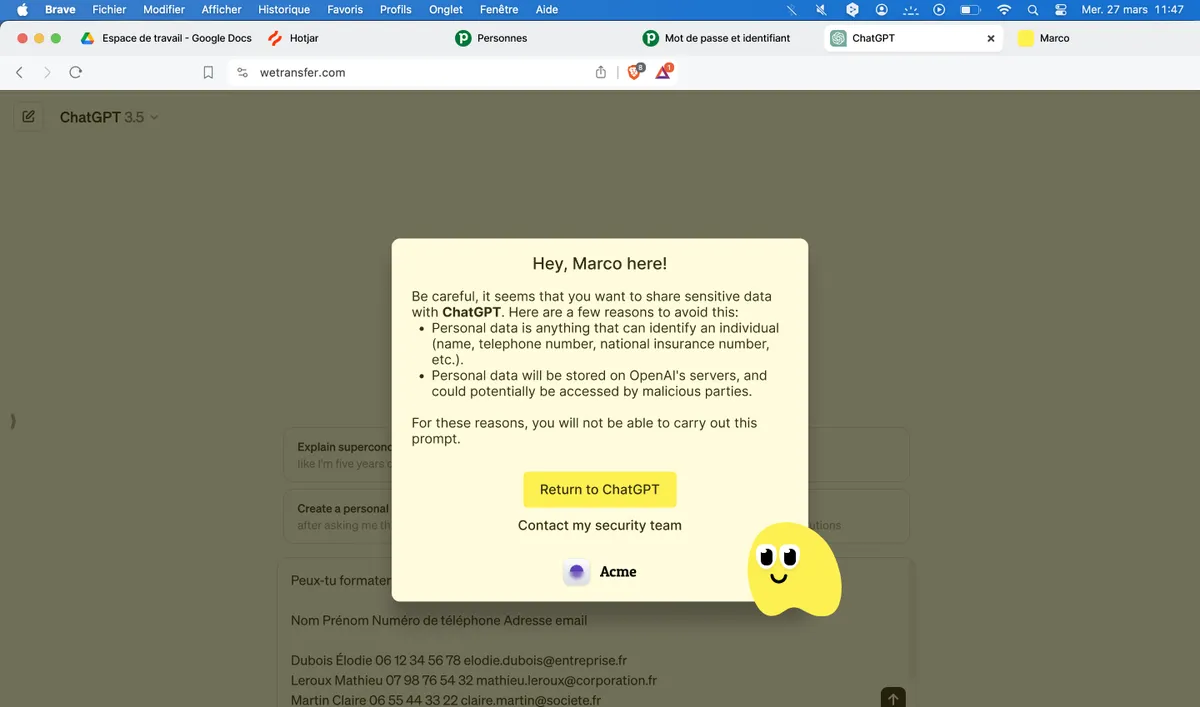
Year 3.5 - We named it Marco and crafted a cute ghost as the mascot (hugely inspired from Twin's ❤)
That is when I finally understood that the vision I'd been carrying for almost two years was inherently flawed.
Every prospect I had talked was enthusiastic about it in theory, but once we went into the details, no one was interested. There was just no market for a platform built on top of their existing tools.
Security managers already use point solutions that solve very well the pain point they are used for (eg. data loss prevention, device security, email security). Those tools also include a way to train or at least inform the users that they are doing something wrong.
Hence, there is no need to add complexity with a top layer which only use-case is to ping the user.
I wish I could figure that out earlier, but at least I could rest assured that our vision was definitely doomed.
We moved on.
#2. Zooming out from users' mistakes and targeting mobile security.
From our broader discussions with CISOs, we discovered that mobile security was a big deal. From what we were told, existing solutions were not adapted to the current threat landscape.
We viewed that as an opportunity and started prototyping.
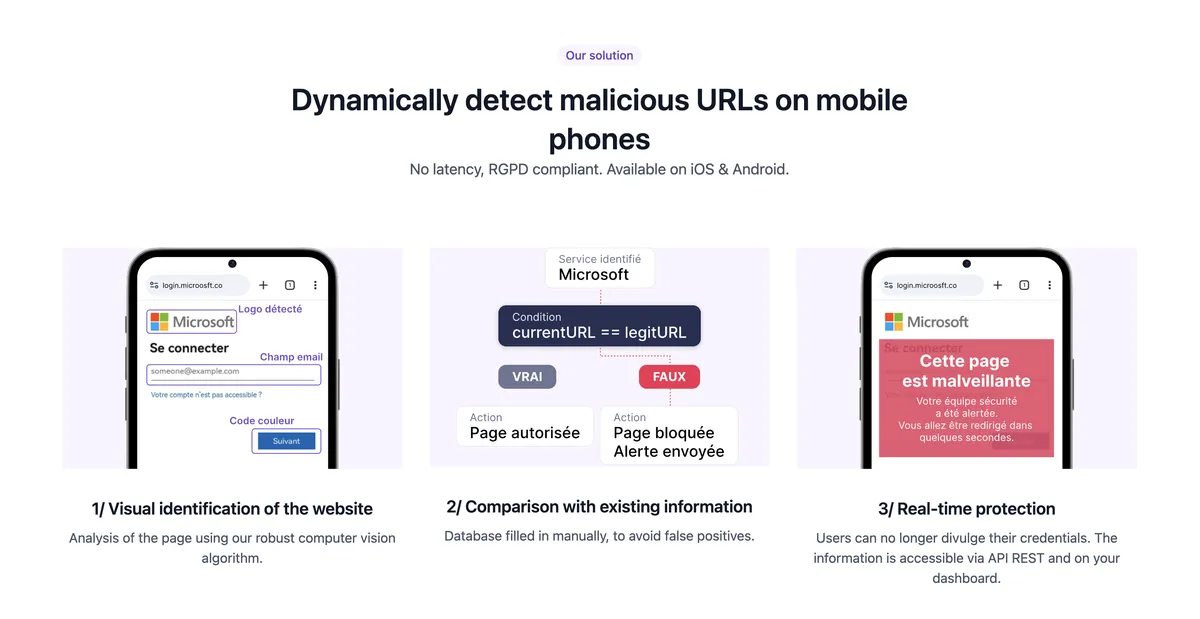
Year 3.5 - A landing page we crafted in 2h to get a sense of prospects' appeal
The issue we stumbled on was mostly technical:
- Let us say building a training product is 3/10 on the scale of complexity.
- Then sending legit phishing emails and land in the inbox is a 5/10.
- Protecting a whole device is an easy 8/10.
Regardless of our CTO's abilities, we were not the best team in the world to create that tool.
#3. Moving away from cybersecurity and studying product discovery.
Once we realized we would not find a place in security (either because we were fed up of the training business, delusional with the market needs, or not technical enough), we pivoted out of cyber.
We started digging into a problem we had encountered ourselves while building Cyrius: Product Discovery.
We had gone through that issue first-hand: it is hard to get customer feedback.
It was especially true for a product like ours where the client (the CISO/CIO) is not the end user (the average employee). YC's first rules are "Talk to users" and "Make something people want", but actually few builders really take the time to understand what people want.
Especially product people, who struggle to engage directly with customers. They send forms and track usage, but forget how useful it can be to call the user directly. We thought we were on a track worth following.
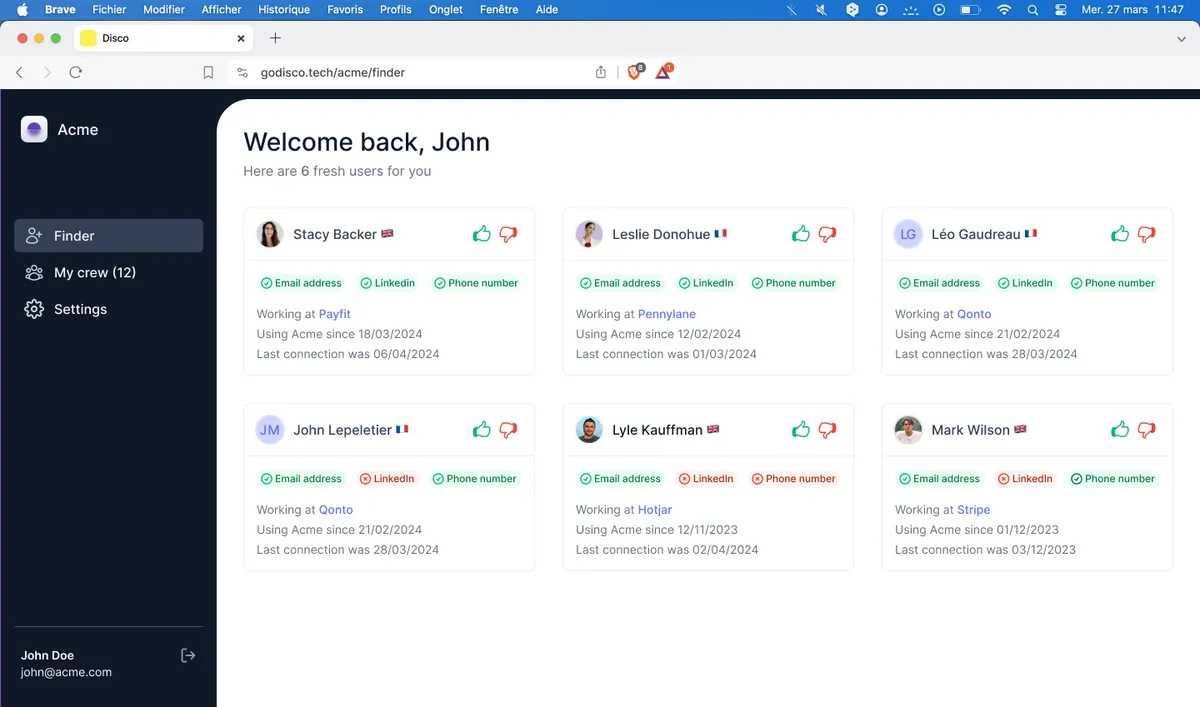
Year 3.5 - One of the hypothesis: a CRM for Product Managers / User Researchers
We tested four main hypothesis through a thorough research, with 60+ interviews with product managers, designers, and user researchers.
We love building, so we started prototyping with Bubble, like in our beginnings. The idea we ended up fleshing out was to send users link that would allow them to have a call with an "AI user researcher", to make possible a product discovery both qualitative and at scale.
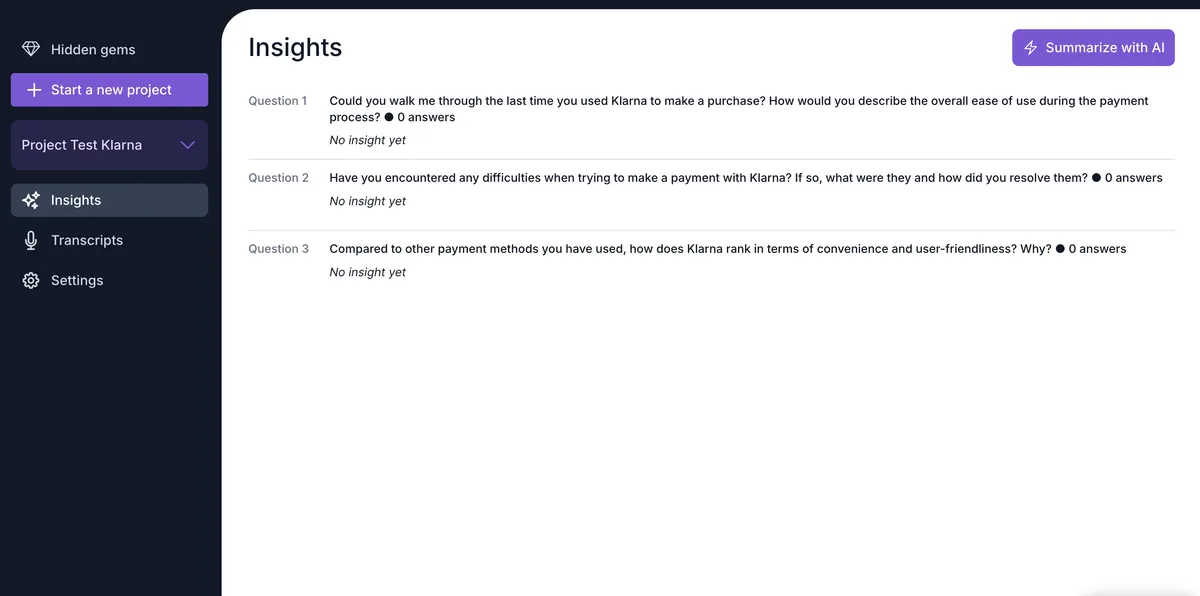
Year 3.5 - Another hypothesis: An AI-powered User Researcher to launch qualitative surveys at scale
This lasted two intense months, with some night sessions to ship early versions fast.
Two people with cash in the bank
In the midst of all those iterations, old tensions started to emerge again between us three. As once can expect, it is hard to navigate that sea of uncertainty.
We eventually realized that our visions were not aligned anymore. We agreed in going separate ways with our CTO.
So we were down to two people.
We powered through as much as we could in the product discovery space, trying to get back on our feet and feel the thrill of the beginnings once more.
Unfortunately for us, what we eventually realised was that willingness to pay is relatively low for such tools. Discovery is for the rich.
That space is also one of the first ones to be disrupted because product folks often transition to being founders. New AI-powered product discovery tools were popping literally every day. Doesn't mean they will succeed, but it makes it hard to stand out of the crowd.
We didn't find a reason why we would succeed in that tsunami of innovation. We had to cancel the product.
It hit us hard, we had invested plenty of time and energy in those pivots. We needed to take a step back.
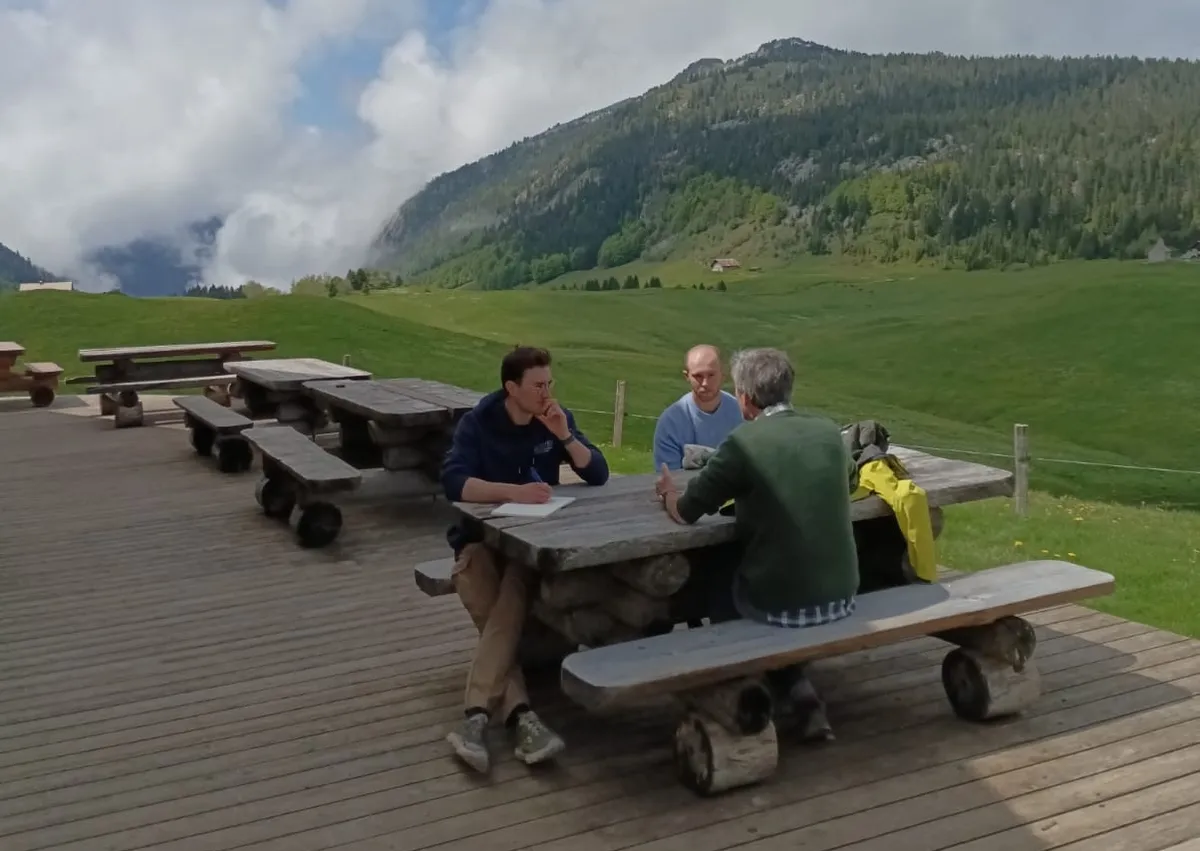
Year 3.5 - We attended an entrepreneur retreat in the mountains with other founders to reflect and be coached (an amazing experience)
It had been 6 months since we had let the team go, and insecurities kept going up.
Sure, we still had cash in the bank. But after all those highs and lows, we were feeling burned out for good.
No matter the time off we took, we could not get back to work. We just did not feel like we could succeed in anything.
We had lost the drive.
That is when a startup dies. A team can find its way among so many challenges, staying afloat in the face of so many obstacles, like we had done so far.
But when founders don't believe anymore, it's over.
We decided to shut down the company.
LESSON 26: Knowing when to quit
I wish I could share a lesson I learned from letting go. Knowing when to quit is as important as any other part of the founder journey. But I found no other answer than listening to my inner voice. Just like when I felt the initial pull toward entrepreneurship 4 years before, I could feel the end. Nothing in the world could have changed that.
But we were not done yet. We wanted to leverage the assets we've built and sell the platform. We could not let 3+ years of work go to waste! If you are interested in the -painful- process of trying to find acquirers and shutting down a company with debts, follow along for the last part.